
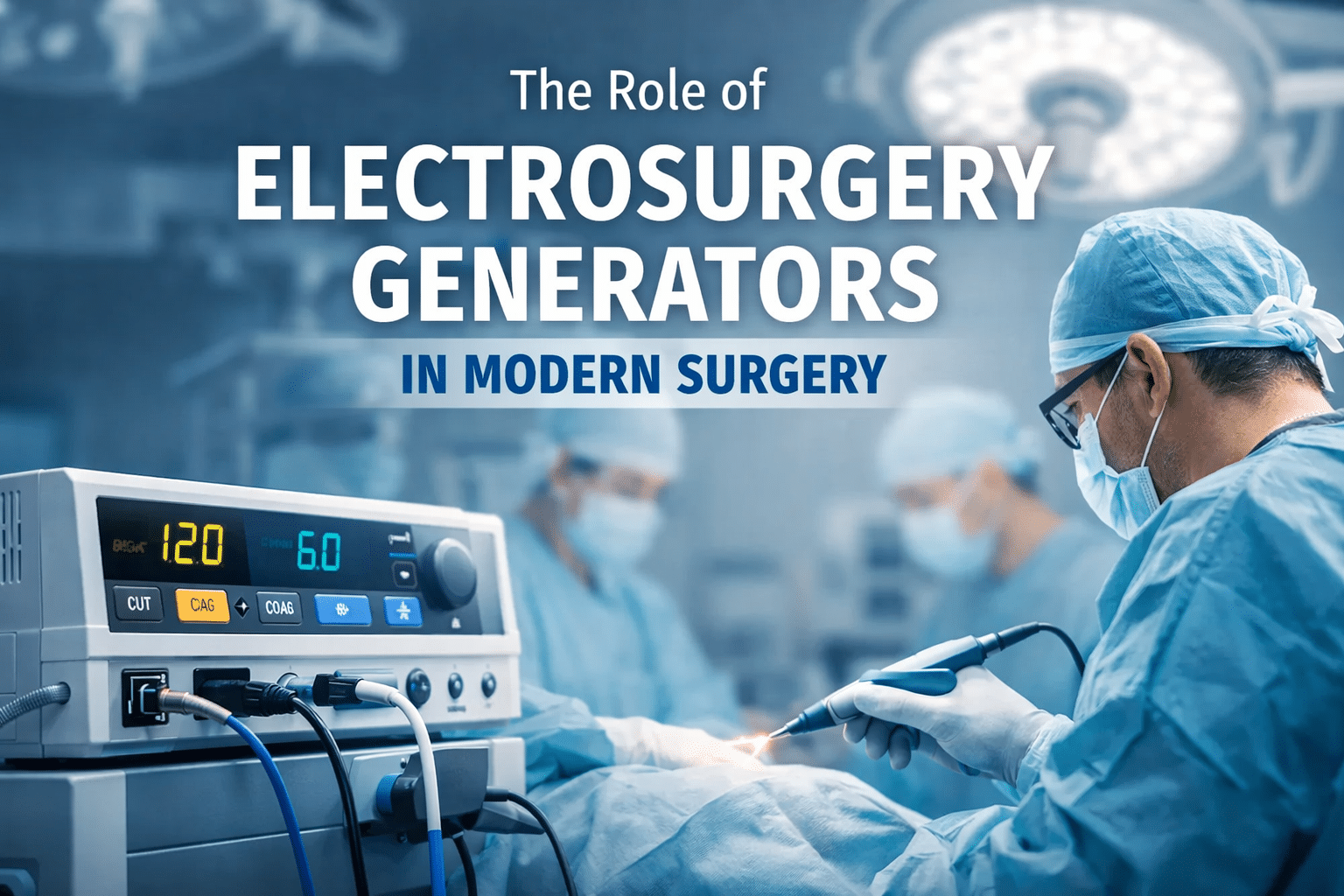
Electrosurgery has become a fundamental component of modern surgical practice. At the heart of this technology lies the electrosurgery generator, a medical device designed to deliver controlled high-frequency electrical energy for tissue cutting and coagulation.
From minimally invasive procedures to complex resections, electrosurgery generators play a critical role in enhancing surgical precision, safety, and efficiency. As surgical techniques continue to evolve, healthcare professionals increasingly rely on advanced energy platforms that support multiple specialties while meeting the highest clinical and safety standards.
This article explores the key aspects of electrosurgery generators, their clinical applications, and their growing importance in modern operating rooms.
Index
- Understanding the Role of an Electrosurgery Generator
- How an Electrosurgery Generator Works
- Monopolar and Bipolar Technologies Explained
- Energy Control and Tissue Interaction
- Safety Features in Modern Electrosurgery Generators
- Clinical Applications Across Surgical Specialties
- The Importance of Electrosurgery Generators in Urology
- Surgical Precision, Hemostasis, and Workflow Efficiency
- Benefits for Hospitals and Healthcare Institutions
- Future Trends in Electrosurgery Generator Technology
1. Understanding the Role of an Electrosurgery Generator
An electrosurgery generator is the central energy source in electrosurgical systems, responsible for producing and regulating high-frequency electrical currents used during surgical procedures. In practice, its primary purpose is to enable surgeons to cut tissue, coagulate blood vessels, or perform both functions simultaneously with controlled precision.
Unlike traditional mechanical cutting tools, electrosurgery generators allow for minimally invasive tissue management, thereby reducing bleeding and improving visibility within the surgical field. This capability, in turn, is particularly valuable in endoscopic and laparoscopic procedures where precision and control are essential.
In modern operating rooms, electrosurgery generators are no longer standalone devices but integrated platforms designed to support multiple surgical techniques and specialties. As such, their adaptability makes them indispensable in hospitals aiming to standardize equipment while maintaining clinical flexibility.
By delivering consistent and controllable energy output, electrosurgery generators contribute to safer procedures, reduced operative time, and improved patient outcomes. Ultimately, these advantages position them as a cornerstone of contemporary surgical technology.
2. How an Electrosurgery Generator Works?
The functionality of an electrosurgery generator is based on the generation of high-frequency electrical energy that passes through surgical instruments to interact with biological tissue. In this process, the generator converts electrical power into controlled waveforms suitable for cutting, coagulation, or blended surgical effects.
Additionally, energy modulation is a key feature of modern generators. Surgeons can adjust power levels and modes depending on tissue type, procedure complexity, and clinical objectives. As a result, this flexibility ensures precise energy delivery while minimizing unintended thermal damage.
The generator works in coordination with electrodes, resection loops, or laparoscopic instruments. While the generator produces and regulates energy, the surgical instruments deliver it directly to the tissue, thereby creating a seamless and controlled surgical process.
Furthermore, advanced electrosurgery generators incorporate real-time monitoring systems that adapt energy output to tissue resistance. This dynamic response enhances safety and ensures consistent surgical performance throughout the procedure.
Discover the electrosurgical technologies behind modern surgical performance
3. Monopolar and Bipolar Technologies Explained
Electrosurgery generators typically support two main operating modes: monopolar and bipolar. Each of these modes serves specific clinical purposes and offers unique advantages depending on the surgical context.
In monopolar mode, electrical current flows from the active electrode through the patient’s body to a return electrode. Historically, this configuration has been widely used for decades and remains effective for a variety of procedures. However, it requires careful energy management and specific irrigation conditions.
By contrast, bipolar mode confines the electrical current between two electrodes located at the surgical site. This localized circuit enhances safety and allows the use of saline irrigation, thereby reducing the risk of fluid-related complications.
Consequently, modern electrosurgery generators are designed to support both modes, offering surgeons the flexibility to choose the most appropriate approach based on procedural requirements. This versatility is essential for institutions seeking comprehensive and adaptable surgical platforms.
Learn more about bipolar technology for precision and surgical safety
4. Energy Control and Tissue Interaction
Precise energy control is one of the most critical functions of an electrosurgery generator. In fact, the way electrical energy interacts with tissue directly influences surgical outcomes, healing time, and complication rates.
To address this, modern generators are engineered to deliver consistent energy while minimizing thermal spread. As a result, controlled tissue interaction leads to cleaner incisions, effective coagulation, and reduced damage to surrounding structures.
This level of precision is particularly important in delicate procedures where preserving healthy tissue is essential. Moreover, improved tissue response enhances the quality of surgical specimens, supporting accurate pathological assessment.
Ultimately, by optimizing energy delivery, electrosurgery generators help surgeons achieve predictable results across a wide range of procedures and tissue types.
5. Safety Features in Modern Electrosurgery Generators
Patient and operator safety is a top priority in electrosurgical design. For this reason, modern electrosurgery generators integrate advanced safety mechanisms to monitor energy output and system performance in real time.
These mechanisms include automatic power regulation, tissue impedance monitoring, and fault detection systems. Together, they help prevent excessive thermal injury and reduce the risk of unintended tissue damage.
In addition, enhanced safety systems protect surgical teams by minimizing electrical hazards and ensuring stable device operation throughout procedures. This protection contributes to a safer and more controlled operating room environment.
By incorporating multiple layers of safety, modern generators support compliance with international medical standards and institutional safety protocols.
6. Clinical Applications Across Surgical Specialties
Electrosurgery generators are used across a broad range of surgical specialties, including urology, gynecology, general surgery, and ENT. Because of this versatility, they have become a standard component in both open and minimally invasive procedures.
Within each specialty, the generator supports precise tissue management, effective hemostasis, and reduced operative time. As a result, this adaptability allows healthcare institutions to standardize equipment while serving diverse clinical needs.
Furthermore, the ability to support multiple procedures with a single platform enhances efficiency and reduces the need for specialized devices, making electrosurgery generators a practical investment for modern hospitals.
7. The Importance of Electrosurgery Generators in Urology
In urology, the electrosurgery generator plays a vital role in procedures such as prostate and bladder resections. In this setting, reliable energy delivery enables controlled cutting and effective bleeding management, which are essential for endoscopic urological surgery.
Furthermore, generators that support bipolar technology offer additional safety advantages by allowing saline irrigation and reducing systemic risks. As a result, these features align with modern urological practices focused on patient safety and procedural efficiency.
As urology continues to evolve and adopt minimally invasive techniques, electrosurgery generators remain central to achieving consistent and high-quality outcomes.
Explore Lamidey Noury advanced solutions for urology procedures
8. Surgical Precision, Hemostasis, and Workflow Efficiency
Electrosurgery generators contribute directly to improved surgical workflow by combining cutting and coagulation functions into a single system. Through this integration, precision is enhanced and the need for instrument changes during procedures is reduced.
In addition, effective hemostasis improves visibility, allowing surgeons to work more efficiently and confidently. Consequently, reduced operative time benefits both patients and surgical teams while optimizing operating room utilization.
By supporting smooth and predictable workflows, electrosurgery generators help institutions improve overall surgical efficiency.
9. Benefits for Hospitals and Healthcare Institutions
From an institutional perspective, electrosurgery generators offer long-term value by reducing complication rates and supporting efficient resource management. In particular, shorter hospital stays and fewer postoperative issues contribute directly to cost optimization.
Additionally, standardized electrosurgical platforms simplify staff training and maintenance, thereby improving operational consistency across departments.
Taken together, these benefits make electrosurgery generators a strategic investment for healthcare providers focused on quality and sustainability.
See how Lamidey-Noury supports hospitals with efficient surgical solutions
10. Future Trends in Electrosurgery Generator Technology
The future of electrosurgery generators is driven by innovation in energy modulation, ergonomics, and digital integration. As technology advances, emerging solutions aim to enhance precision while further improving safety and user experience.
Looking ahead, smart energy systems and advanced feedback mechanisms are expected to redefine surgical performance and adaptability. Ultimately, these developments reinforce the role of electrosurgery generators as essential tools in modern and future surgical environments.
Looking for advanced electrosurgery generator solutions? Contact Us Now